KNetAI vs Relevance AI
Relevance AI makes building an AI 'workforce' feel accessible to anyone. KNetAI gives engineers the control, durability, and data sovereignty that regulated, mission-critical work demands. Ease versus depth — pick honestly.
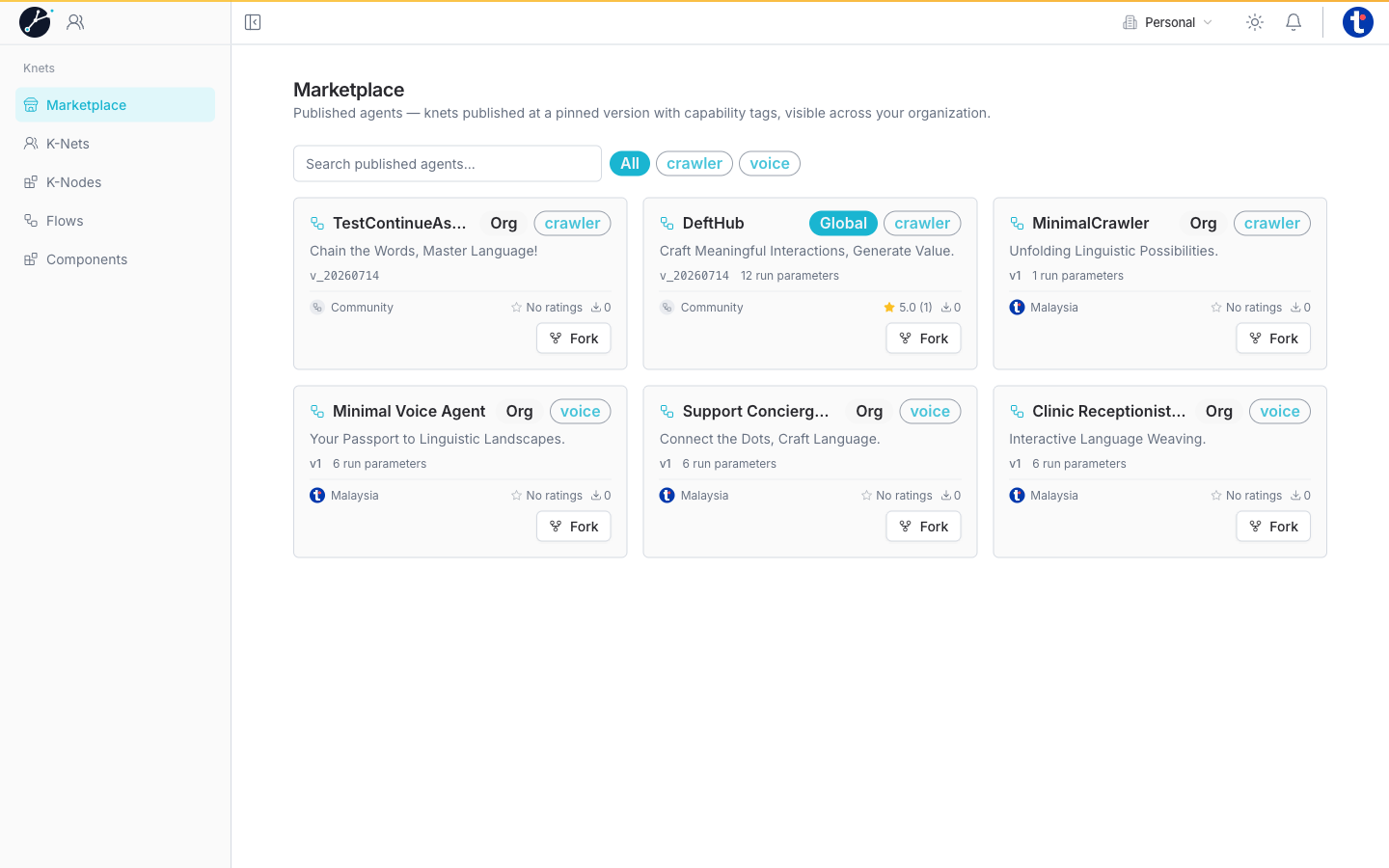
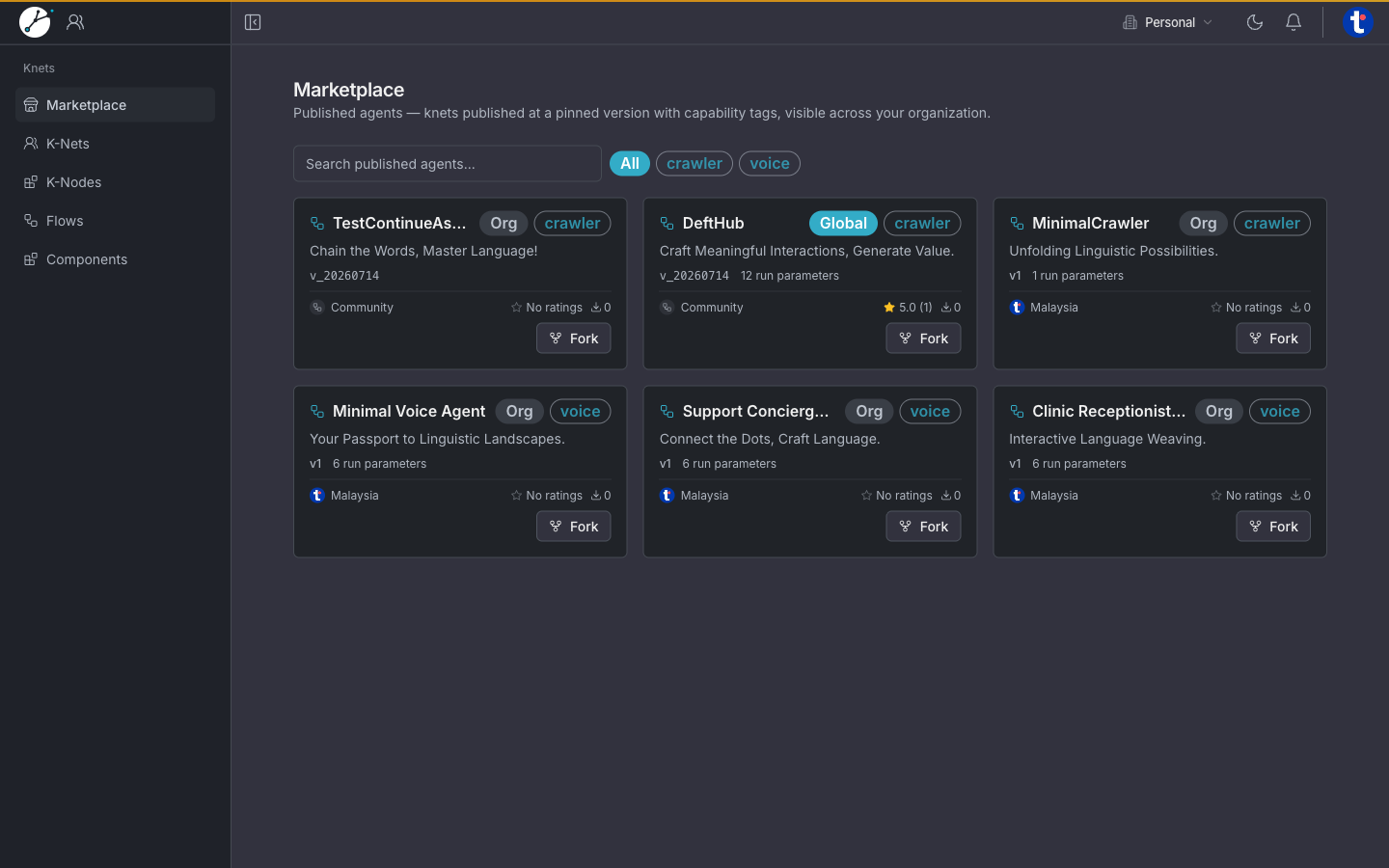


Where no-code convenience meets enterprise reality
Data residency: a SaaS-first model can conflict with on-prem or air-gapped requirements for sensitive data.
Deep control: engineers wanting custom logic, versioning, and testing can find no-code constraints limiting.
Long-running durability: multi-week, resumable, replayable processes need more than a hosted agent builder.


What K-Nets add for engineered deployments
- Run in your own VPC or fully air-gapped, with any model — including local. Relevance is SaaS-first, which can be a blocker for regulated data.
- Version, test, and reason about your orchestration as durable code-backed workflows — not only through a no-code canvas.
- K-Nets persist state on a workflow engine, survive restarts, and run for weeks with deterministic replay and full audit.
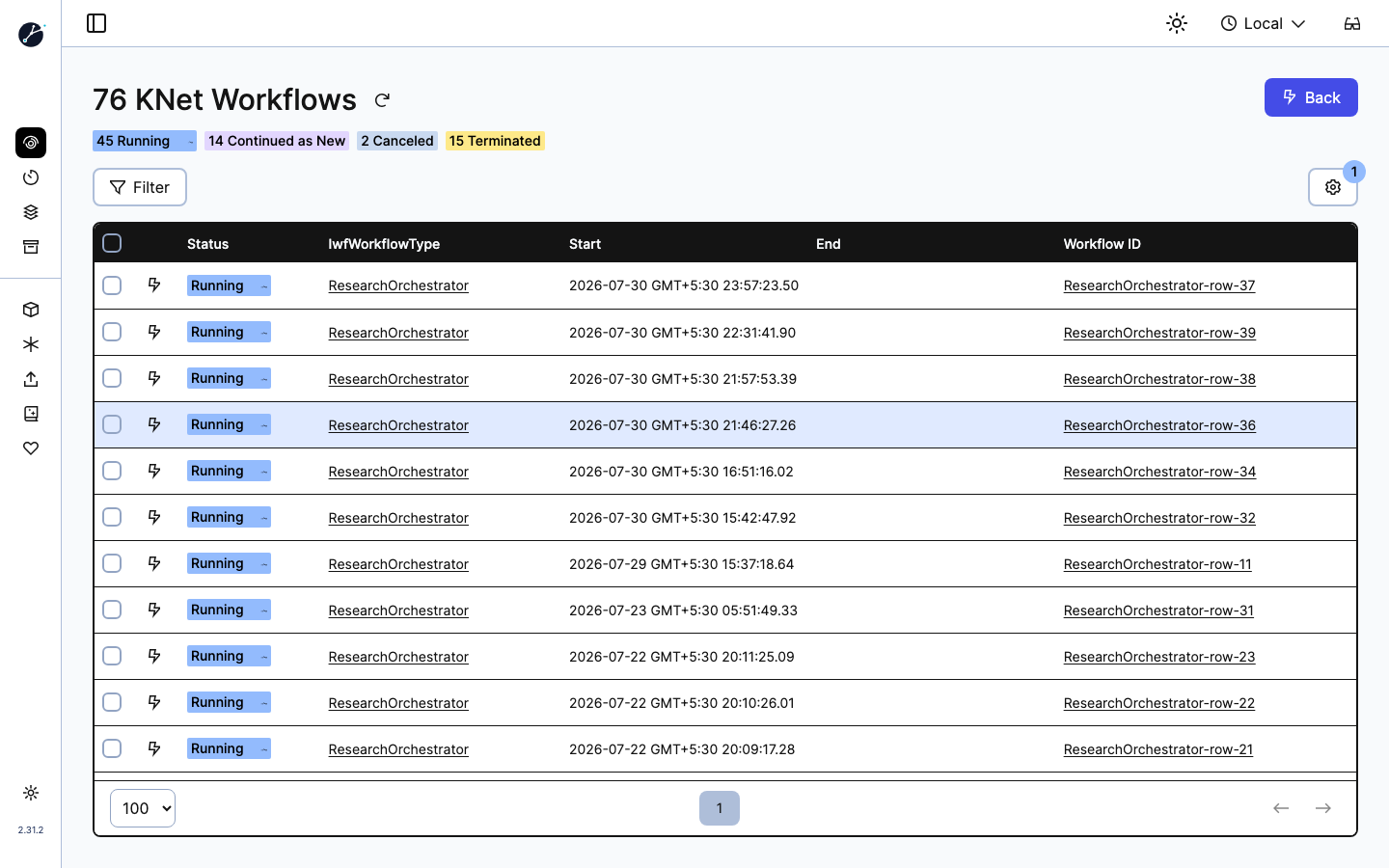
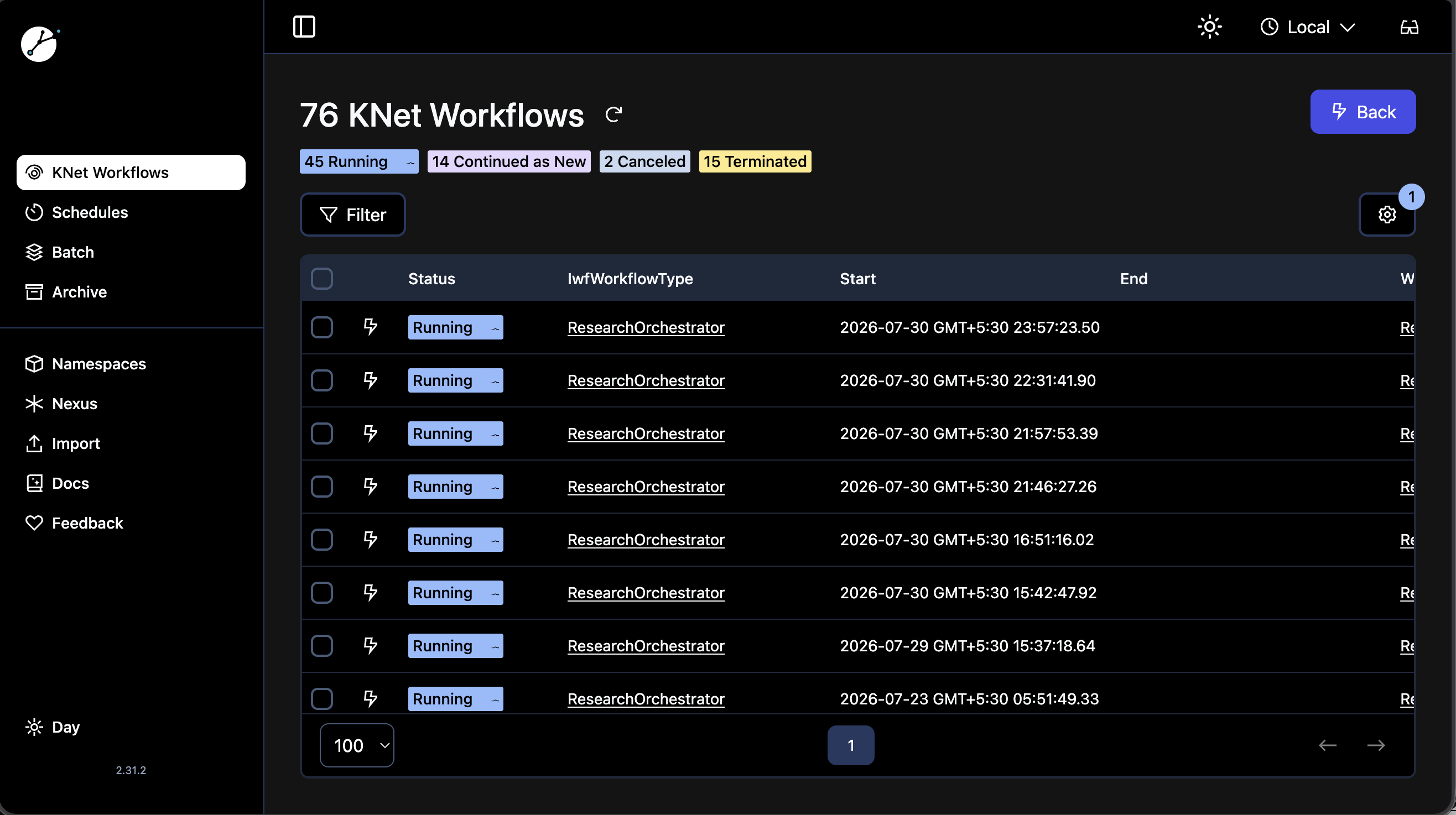
Where Relevance AI genuinely shines
Relevance AI is a strong product for its audience, and it's worth saying so:
- No-code accessibility. Business users can assemble an "AI workforce" without writing code — a genuine unlock.
- Fast time-to-value. Building agent teams and giving them tools is quick and approachable.
- Nice UX. The interface is polished and friendly for non-engineers.
- Tools ecosystem. A marketplace of tools and templates speeds up common use cases.
Where teams hit the wall
The no-code, SaaS-first design that makes Relevance approachable is also its constraint for demanding deployments:
- Data residency. A hosted-first model can clash with on-prem, air-gapped, or strict-sovereignty requirements.
- Depth of control. Engineers wanting custom logic, rigorous versioning, and automated testing can feel boxed in.
- Long-running durability. Multi-week, resumable, replayable processes ask for a workflow engine underneath.
- Scaling transparency. Hosted abstractions can make performance and cost at scale harder to reason about.
If your agents will touch regulated data or must run inside your own network, "no-code and hosted" is exactly the constraint to check first — before the demo, not after.
Side by side
| Relevance AI | KNetAI | |
|---|---|---|
| Primary audience | Business users (no-code) | Engineers + operators |
| Deployment | SaaS-first | VPC / on-prem / air-gapped |
| Data sovereignty | Limited | Full control |
| Depth of custom control | Constrained by no-code | Deep, code-backed workflows |
| Long-running durable state | Limited | Built in |
| Governance & audit | Basic | Deep, runtime-level |
| Best fit | Fast business-built agents | Regulated, mission-critical networks |
The honest verdict
Choose Relevance AI when business teams need to build capable agents fast, without engineers, and data residency isn't a hard requirement — it's excellent at that. Choose KNetAI when the deployment must be sovereign, durable, deeply controllable, and auditable. KNetAI stays approachable through Mission Control, but never caps the engineers who need to go deeper.
Frequently Asked Questions
For business users standing up an AI workforce quickly, easier genuinely is better — and Relevance is excellent at that. KNetAI trades some of that immediacy for depth: data sovereignty, engineered control, durability, and governance. If your deployment is regulated or mission-critical, that trade usually pays off.
Yes — Mission Control provides a visual surface for building and operating networks. The difference is that KNetAI doesn't force you to stay no-code; engineers can go as deep as they need, and the platform still self-hosts.
When business teams need to build useful AI agents fast without engineering support, data residency isn't a hard constraint, and processes are relatively short-lived. Relevance shines there.



Accessible when you want it, deep when you need it
Bring the workforce you built in Relevance. We'll show you what durability, control, and self-hosting add on a K-Net.