How KNetAI compares
Most agent tools help you *prototype*. KNetAI helps you *operate*. Below is a candid, engineer-honest look at the popular agentic platforms — their real strengths, their real limits, and where durable K-Nets fit.
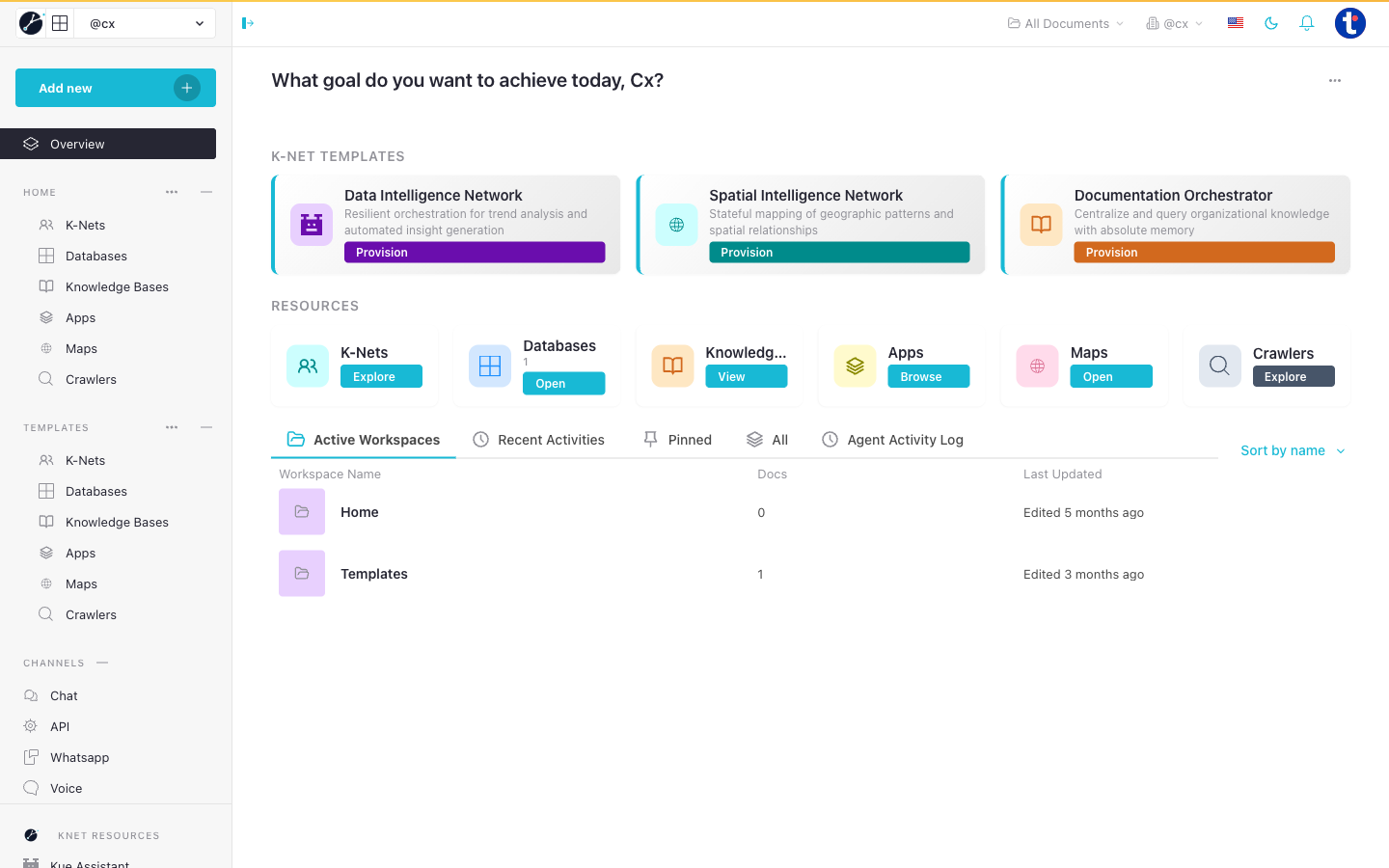
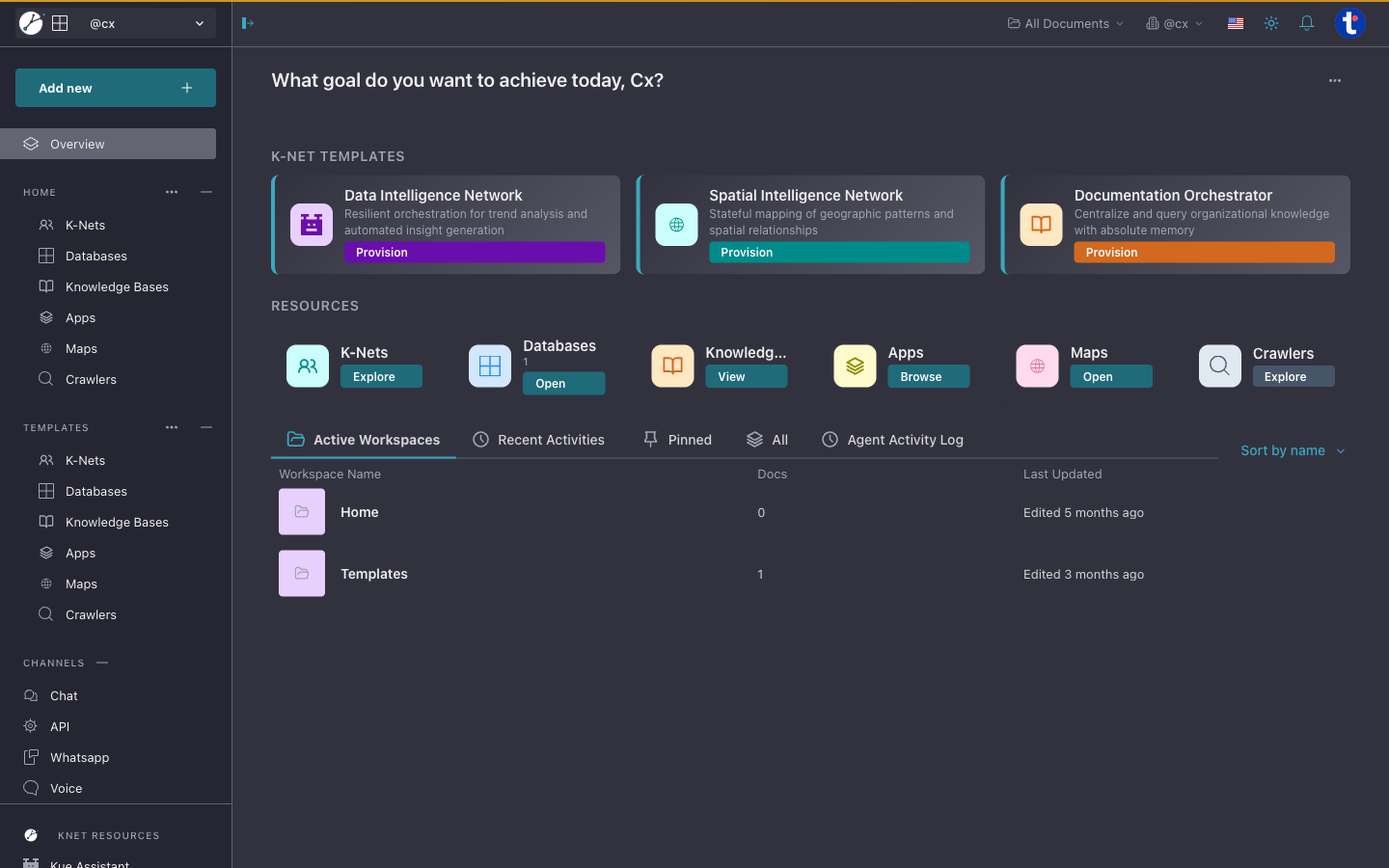


What actually makes KNetAI different
- K-Nets run on a workflow engine, not a request/response loop. A network can pause for a human approval, wait three weeks for an external event, survive a pod restart, and resume with full state and deterministic replay — no bespoke checkpointing code.
- Retrieval (Smart RAG), crawling, MCP connectors, structured databases, GIS, and voice are first-class services — not packages you assemble, host, and secure yourself. You wire logic; the plumbing is already there.
- Run any model — frontier, open-weight, or local — and deploy in your own VPC or fully air-gapped. No single-vendor model lock-in, and your regulated data never has to leave your infrastructure.
- RBAC, audit trails, human-in-the-loop checkpoints, and per-step observability are part of the runtime — the things you need to put an agent in front of a regulator, not just a demo.
The comparison matrix
We group the market into three families, because they solve genuinely different problems. Pick your row honestly.
| Platform | Best at | Real limitation | Deep dive |
|---|---|---|---|
| LangGraph (LangChain) | Low-level, code-first control over agent graphs | You build & operate the state, infra, UI, and durability yourself | KNetAI vs LangGraph |
| CrewAI | Fast, intuitive multi-agent prototyping | Production durability, state, and observability are still maturing | KNetAI vs CrewAI |
| AutoGen (Microsoft) | Flexible conversational multi-agent research | Research-grade; hardening and governance are left to you | KNetAI vs AutoGen |
| n8n | Visual automation across 400+ integrations | Automation-first — agent memory & long-running reasoning are bolt-ons | KNetAI vs n8n |
| Dify | LLMOps UI for chat apps & simple agents | App-centric; deep multi-system, long-running orchestration is limited | KNetAI vs Dify |
| Relevance AI | No-code AI "workforce" for business users | SaaS-first — data residency, on-prem, and deep control are constrained | KNetAI vs Relevance AI |
| OpenAI AgentKit | Frontier models with the smoothest tool-calling | Locked to one vendor's models & cloud; durability and on-prem are limited | KNetAI vs OpenAI AgentKit |
The honest one-liner. Frameworks (LangGraph, CrewAI, AutoGen) give engineers control but hand you the operations problem. No-code tools (n8n, Dify, Relevance AI, AgentKit) get you moving fast but cap out on durability, governance, and self-hosting. KNetAI is the platform for when an agent has to graduate from "cool demo" to "system the business depends on."
The three families in one glance
Agent frameworks — maximum control, maximum operational burden
LangGraph, CrewAI, and AutoGen are libraries. They're powerful, flexible, and beloved by engineers — and they assume you will host the runtime, persist the state, build the UI, wire the auth, and own reliability. That's a lot of undifferentiated infrastructure to carry into production.
No-code / low-code builders — fast start, real ceilings
n8n, Dify, Relevance AI, and OpenAI's AgentKit lower the barrier dramatically. They're the right call for automations and chat apps. They tend to hit a wall on long-running stateful processes, deep multi-system orchestration, model choice, and data-residency requirements.
Durable orchestration platforms — where KNetAI lives
KNetAI treats an agent network as a durable, stateful process on a workflow engine — with retrieval, connectors, databases, and governance built in. You lose a little of the "npm install and go" immediacy; you gain agents that survive restarts, run for weeks, and pass an audit.
Frequently Asked Questions
We try hard not to be. Every platform below is genuinely good at what it was designed for, and we say so plainly. The honest summary is: if you're prototyping agent logic, several of these tools are excellent and faster to start with than a full platform. KNetAI wins when you need those agents to run reliably, for a long time, under governance — that's a different problem than building them.
If you have strong Python engineers and want maximum control for a focused agent, LangGraph or CrewAI are hard to beat for speed of iteration. If your team is non-technical and you want an AI 'workforce' quickly, Relevance AI or Dify get you there. Choose KNetAI when the agent has to become mission-critical infrastructure — multi-system, long-running, auditable, and self-hosted.
Yes. KNetAI is model-agnostic and MCP-native, so tools and prompts port over. Teams typically keep their agent reasoning and move the orchestration, state, retrieval, and deployment onto K-Nets to gain durability and governance without a rewrite.


See where KNetAI fits for your use case
Bring your hardest agentic workflow. We'll show you honestly whether a K-Net is the right tool — and what it would take to run it in production.