KNetAI vs n8n
n8n is one of the best visual automation tools on the planet. KNetAI is built agent-first for stateful, reasoning-heavy work. If your problem is 'connect these apps,' n8n is superb. If it's 'orchestrate autonomous agents,' read on.
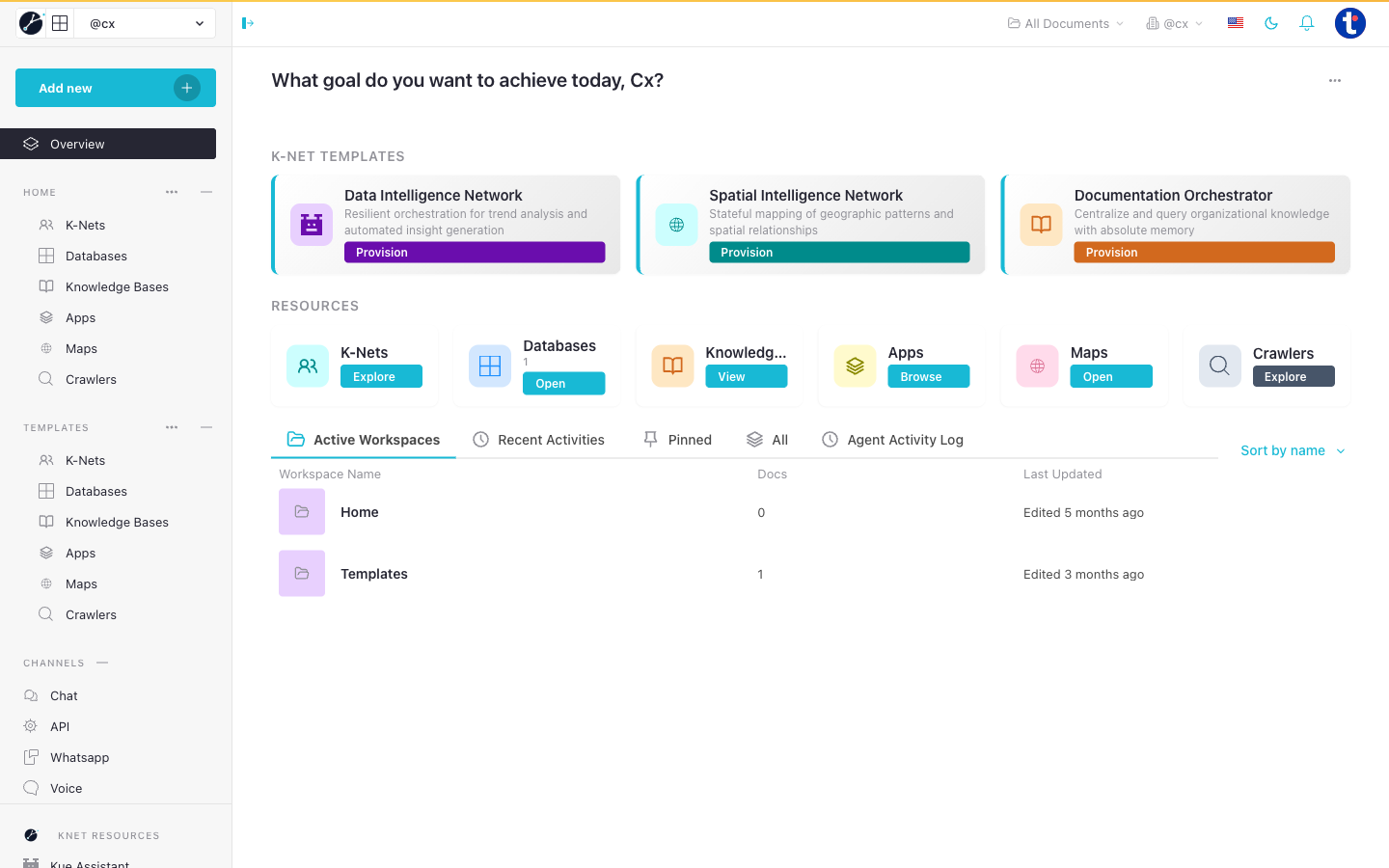
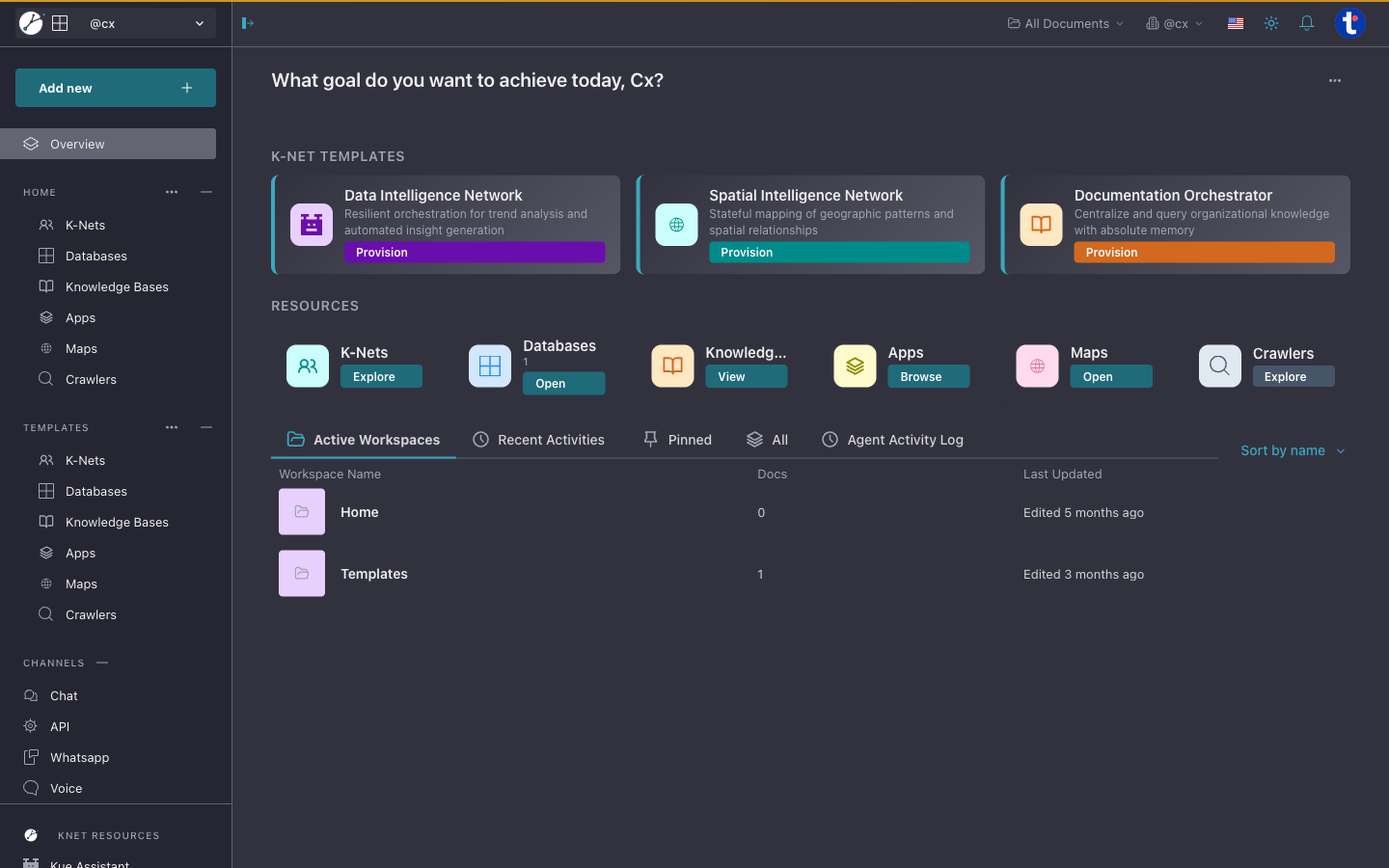


Where automation-first meets agent-first
Agent memory & reasoning: multi-agent state and long-term memory are bolt-ons, not the core model.
RAG at scale: retrieval, chunking, and re-indexing over millions of docs isn't n8n's native strength.
Weeks-long durable processes: node-based flows are tuned for event-to-action, not agents that pause for days and resume.


What K-Nets add for agentic work
- K-Nets are designed around autonomous, reasoning agents with memory and hand-offs — not trigger→action nodes with an LLM step bolted in.
- Deep embedding and sub-second retrieval across millions of documents is a first-class service, not a sequence of HTTP nodes you assemble.
- A K-Net can pause for a human approval, wait weeks for an external event, and resume with full state after a restart — with deterministic replay.
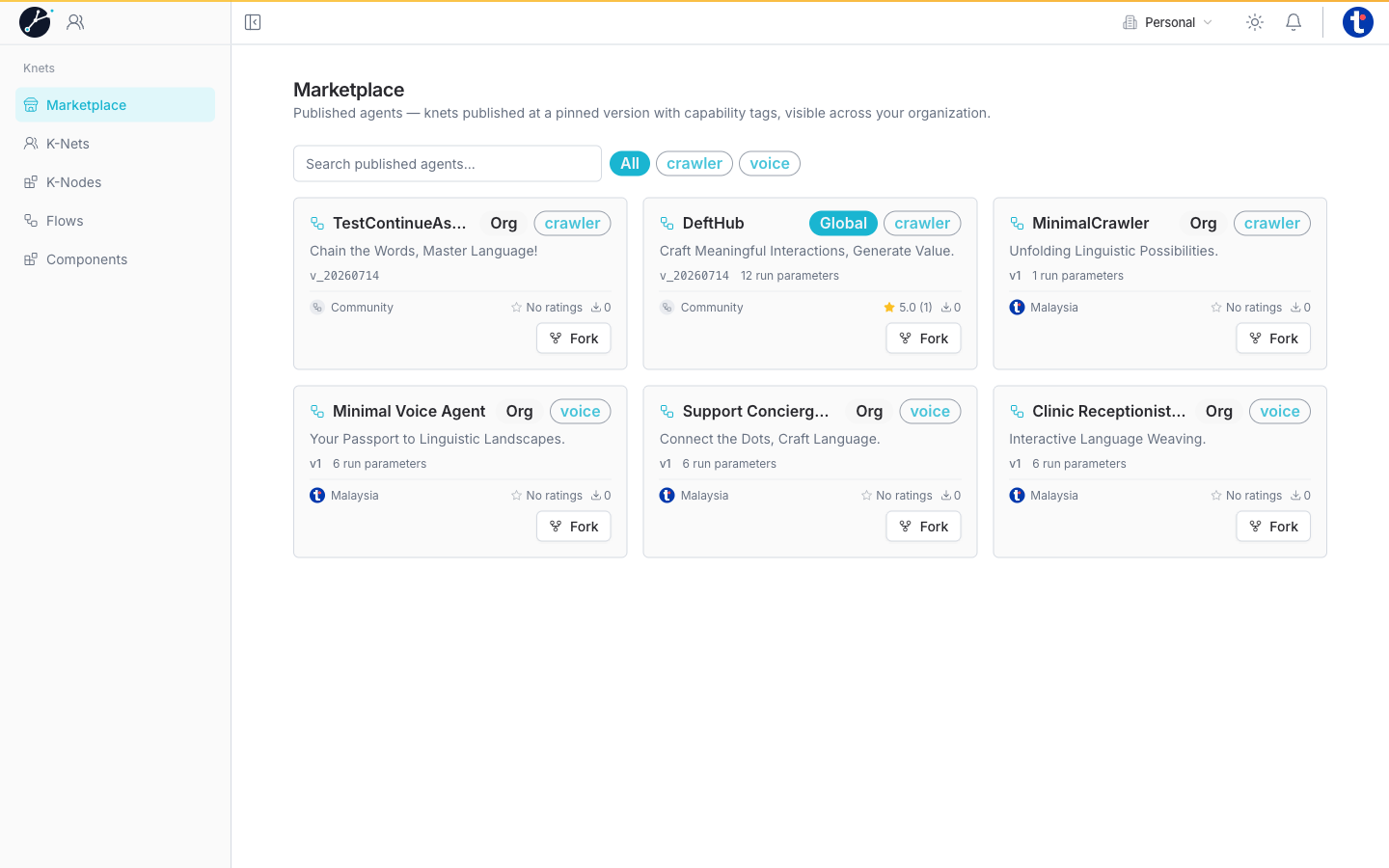
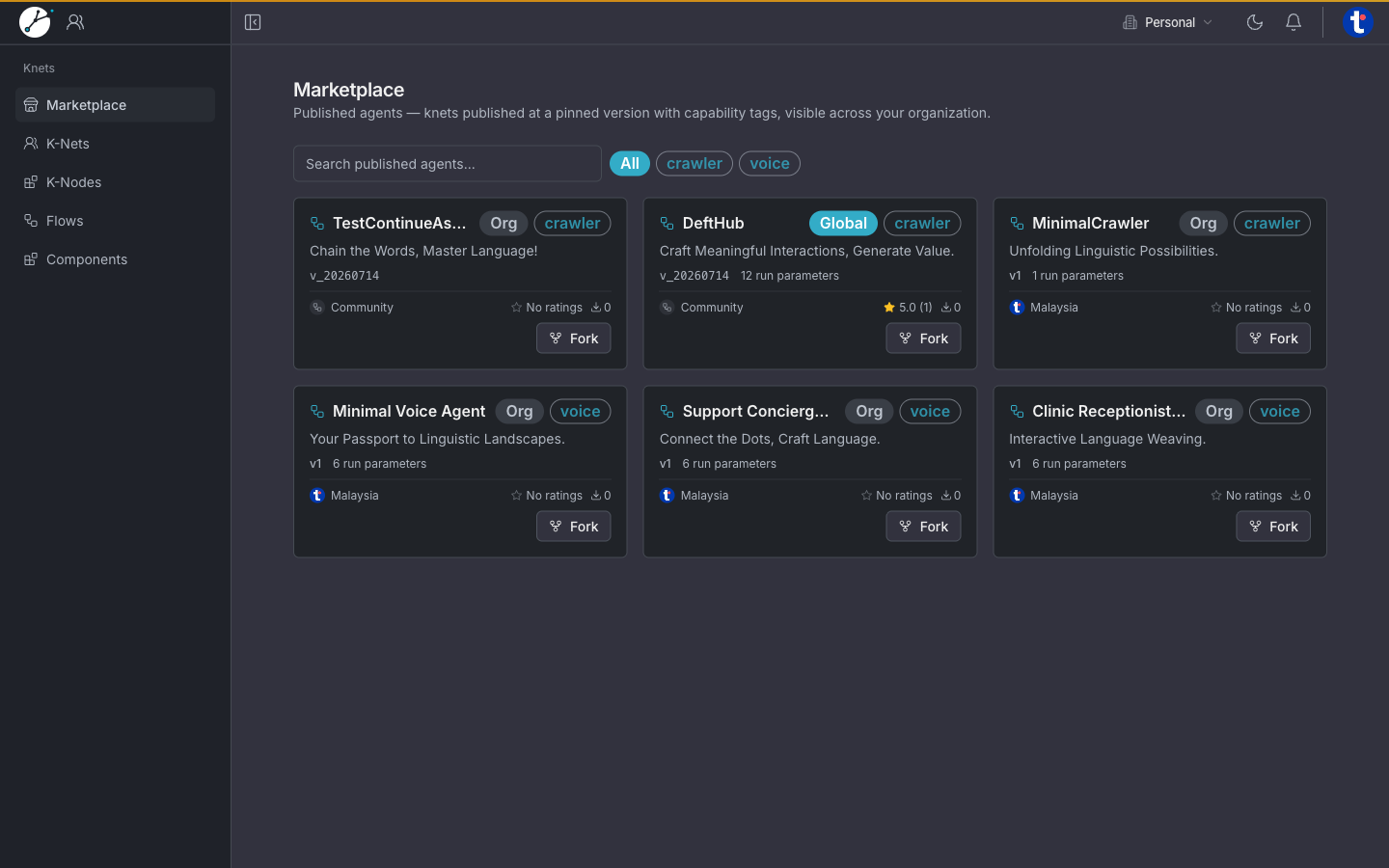
Where n8n genuinely shines
n8n is a genuinely great product, and credit where it's due:
- World-class integrations. 400+ connectors and a superb visual builder make wiring apps together fast and legible.
- Self-hostable & fair-code. You can run it in your own environment, which teams love for control and cost.
- Great for automation. Trigger→transform→action pipelines are clean, reliable, and quick to ship.
- Approachable. Non-engineers can build real, useful flows without much ramp-up.
Where teams hit the wall
The automation heritage that makes n8n strong is also its ceiling for agentic work:
- Agents are a node, not the model. Multi-agent collaboration, memory, and hand-offs aren't the native abstraction.
- RAG at scale is awkward. Deep retrieval over large corpora means stringing together nodes rather than using a purpose-built engine.
- Long-running agent state. Processes that must pause for days, keep rich state, and resume reliably strain the node paradigm.
- Observability of reasoning. You can see which node ran; tracing an agent's decisions across a long run is a different need.
Simple test: is your workflow a pipeline of steps or a network of agents? If steps, n8n is excellent. If agents that reason, remember, and run for a long time, that's a K-Net.
Side by side
| n8n | KNetAI | |
|---|---|---|
| Core model | Visual automation (trigger→action) | Agent-native orchestration |
| App integrations | 400+, best-in-class | MCP connectors + native services |
| Multi-agent reasoning & memory | Bolt-on | First-class |
| RAG over large corpora | Assemble via nodes | Managed Smart RAG engine |
| Long-running durable agent state | Limited | Built in |
| Self-hosting | Yes | Yes (VPC / air-gapped) |
| Best fit | App-to-app automation | Stateful autonomous agent networks |
The honest verdict
If your problem is integration and automation, n8n is fantastic and probably the fastest path — keep using it. If your problem is orchestrating autonomous, stateful agents over long horizons and large knowledge, that's what KNetAI is built for. The two live happily side by side: n8n as connective tissue, K-Nets as the reasoning layer.
Frequently Asked Questions
For automations with a smart step in the middle, absolutely — n8n's AI nodes are great and often the pragmatic choice. The distinction is architectural: n8n orchestrates *steps*, and an agent is one step; KNetAI orchestrates *agents*, where reasoning, memory, and long-running state are the core model rather than an add-on.
Yes, and many teams do. n8n is excellent as the connective tissue for app-to-app automation, while KNetAI handles the stateful, reasoning-heavy agent networks. They complement each other cleanly, and both can be self-hosted.
When the job is integration and automation — move data between apps, transform it, trigger actions — with maybe one LLM step. n8n's 400+ integrations and visual builder are hard to beat there.



Automation and agents, in the right place
Tell us where your n8n flows are straining under agentic requirements. We'll show you what belongs on a durable K-Net.